- October 8, 2026
- By: Massey Ferguson Ghana
- in: Agricultural Machinery, Agriculture, Farm Equipment, Farming, Massey Ferguson Tractors

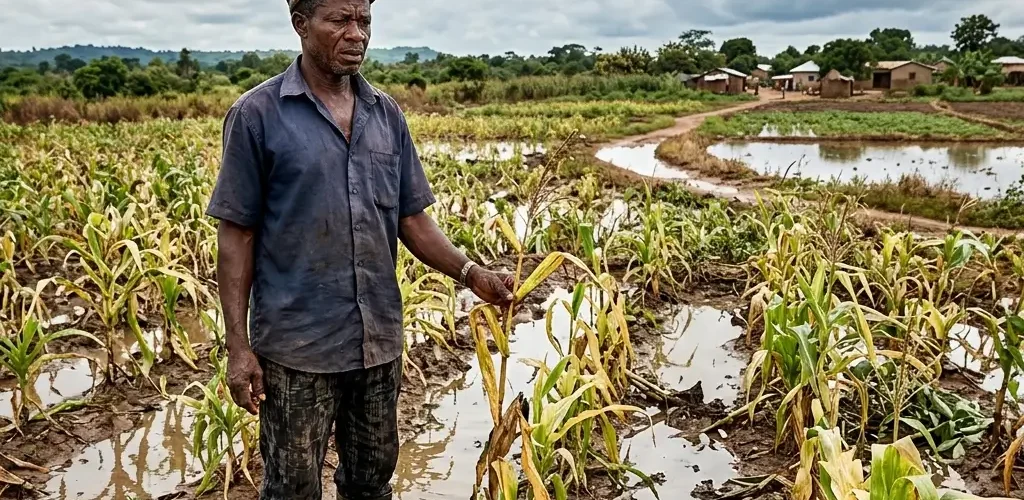
Flooding in Ghana threatens the livelihoods of millions of farmers every rainy season. From the northern savannah to the coastal south, rising waters wash away crops, degrade soil, and drain rural economies. Understanding the impact of floods on farming in Ghana is the first step towards building lasting climate resilience.
Here’s what you’ll learn: how floods damage crops, degrade soil, cause economic losses, and what resilience strategies help farmers recover and prepare.
Flooding destroys standing crops by submerging fields, cutting off oxygen to roots, and spreading plant diseases. Staple crops such as maize, rice, yam, and cassava are especially vulnerable.
When floodwaters linger for days, entire harvests can rot before farmers reach their fields. In flood-prone regions like the White Volta basin, a single event can wipe out months of work.
Bottom line: Ghana agriculture flooding often means total crop loss, reduced yields, and delayed planting seasons.
Floods strip away the fertile topsoil that crops depend on. This process, known as erosion, removes vital nutrients and leaves land less productive for future seasons.
Common soil problems after flooding include:
Nutrient loss from washed-away topsoil
Waterlogging that suffocates plant roots
Salinity in coastal farms as seawater intrudes
Compaction that makes replanting harder
Restoring damaged soil can take several seasons, forcing farmers to invest in fertilisers and land recovery.
The impact of flooding in Ghana reaches far beyond the farm gate. When harvests fail, food prices rise, incomes fall, and rural families struggle to recover.
Key economic effects include:
Lost income from destroyed crops and livestock
Higher food prices due to reduced supply
Debt as farmers borrow to replant
Damaged infrastructure, including roads and storage facilities
For smallholder farmers who depend on each harvest, one flood can undo years of progress.
Building climate resilience for Ghana farmers means preparing land, crops, and equipment before the rains arrive. Practical solutions help reduce losses and speed up recovery.
Effective flood-resilience strategies:
Watch for this common mistake: farmers who delay soil recovery often face poor yields the following season. Acting early makes all the difference.
Flooding will remain a challenge, but Ghanaian farmers do not have to face it alone. Reliable machinery helps farms recover faster, prepare land properly, and plant with precision.
Key takeaways:
Floods cause crop loss, soil damage, and economic hardship
Soil recovery and drainage are vital after floods
Resilience depends on planning, better crops, and mechanisation
Massey Ferguson Ghana provides durable tractors and farming equipment built for tough conditions. With the right tools, farmers can rebuild quickly, protect their soil, and strengthen their harvests season after season.


Post a Comment