- September 9, 2026
- By: Massey Ferguson Ghana
- in: Agricultural Machinery, Agriculture, Farm Equipment, Farming, Massey Ferguson Tractors, News

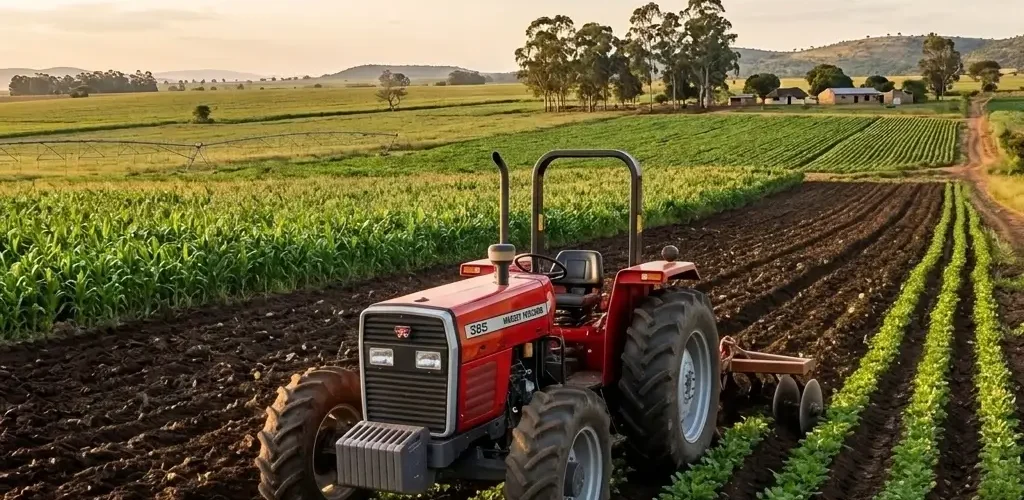
For decades, farming in Ghana relied on hand hoes, cutlasses, and hard physical labor. Change came slowly. Government schemes in the 1960s and 1970s introduced the first waves of tractors, and by the early 2000s mechanization had become a national goal. Today, farmers from the Northern savannah to the Ashanti forest belt use tractors to plough, plant, and haul faster than ever before. Still, one hurdle remains: cost.
A new tractor is one of the biggest investments a farmer will make. Three barriers stop many from buying outright:
High upfront costs — a quality tractor runs from thousands of dollars.
High interest rates — loans can carry steep repayment terms.
Strict lending criteria — banks often want collateral and a solid credit history.
Good agricultural financing in Ghana removes these barriers. It spreads the cost over time, so you can start earning from your land while you pay.
You have several routes to fund your purchase. Compare them before you commit.
Government subsidies and low-interest schemes. State-backed programmes support mechanisation with reduced rates and easier terms for smallholders.
Bank agricultural loans. Many Ghanaian banks offer a farm equipment loan with fixed repayment periods tied to harvest cycles.
Installment plans. Some suppliers let you pay in stages, easing pressure on cash flow.
Cooperative or group financing. Farmer groups pool resources to secure better rates together.
The best way to buy a tractor on loan in Ghana is to match your repayment schedule to your income season and compare interest rates across banks and government schemes.
Massey Ferguson Ghana supplies a full range to suit every farm size and budget.
| Model | Horsepower | Drive | Best For |
|---|---|---|---|
| MF 240 | 50HP | 2WD | Small farms, light tilling |
| MF 260 | 60HP | 2WD | General field work, mixed farming |
| MF 360 | 60HP | 2WD | Steady all-round farm tasks |
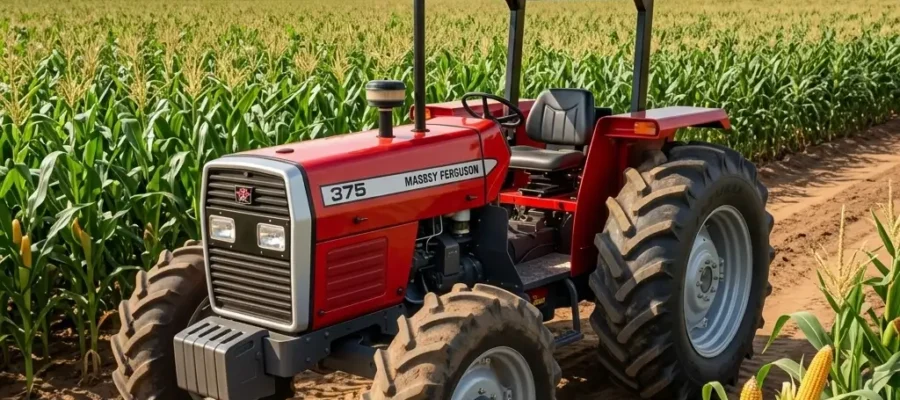
| MF 375 | 75HP | 2WD / 4WD | Medium-duty cultivation, hauling |
| MF 385 | 85HP | 2WD / 4WD | Heavy ploughing, large commercial fields |
Tractor prices in Ghana typically start near USD 10,000 for entry-level models and rise beyond USD 60,000 for larger, high-horsepower machines with extra implements.
The right tractor depends on your farm size, soil type, and workload. For smallholdings and light tilling, the Massey Ferguson MF 240 (50HP) or MF 260 (60HP) offer reliable performance at a lower entry cost, making them easier to finance with shorter loan terms. Medium to large farms with harder soils benefit from the MF 375 or MF 385, available in 4WD, which handle heavy ploughing and long working hours. When choosing a financing plan, match your repayment schedule to your harvest cycle, compare interest rates across bank loans and government subsidy schemes, and factor in the full cost — including implements, shipping to the Port of Tema, and spare parts — before committing.
Most lenders and government-backed schemes in Ghana require a down payment of between 10% and 30% of the tractor’s total purchase price. The exact amount depends on the lender, the loan programme, and your credit profile. Farmers with a strong repayment history or land collateral may secure better terms with a lower upfront deposit. Repayment periods typically range from one to five years, with some harvest-linked schemes allowing flexible instalments that align with your income cycle. Always compare total interest costs — not just monthly payments — before signing any agreement.
To apply for agricultural financing in Ghana, most lenders require proof of identity (such as a Ghana Card or passport), proof of land ownership or a tenancy agreement, recent bank statements, and a completed loan application form. Some government-backed schemes may also ask for farm size details and an outline of your intended crop or activity. Having these ready before you approach a bank or scheme speeds up the process significantly.

Post a Comment